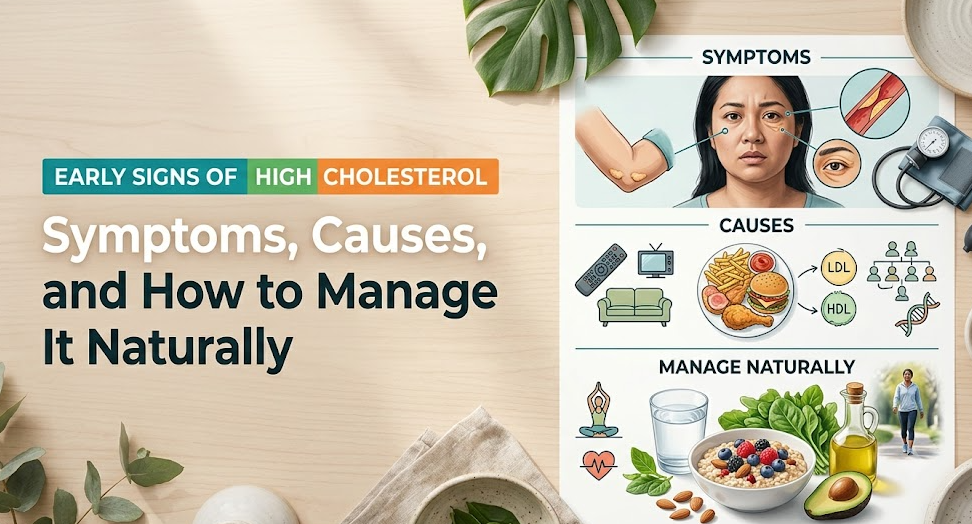
High cholesterol is one of the most common health concerns worldwide. It can increase the risk of heart disease, stroke, and other cardiovascular problems when left unmanaged.
One of the challenges with high cholesterol is that it often develops silently. Many people do not experience obvious symptoms until cholesterol buildup begins affecting blood vessels or heart health.
Understanding the early warning signs, risk factors, and healthy lifestyle strategies can help you take action before complications occur.
In this article, we will explore the early signs of high cholesterol, what causes it, and how you can support healthy cholesterol levels naturally.
What Is High Cholesterol?
Cholesterol is a waxy, fat-like substance that your body needs to function properly.
Your body uses cholesterol to help:
- Build healthy cells
- Produce hormones
- Create vitamin D
- Support normal body functions
However, having too much cholesterol in your blood can cause problems.
When excess cholesterol builds up inside arteries, it can form deposits called plaques. Over time, these plaques may narrow blood vessels and reduce healthy blood flow.
Types of Cholesterol
There are different types of cholesterol:
LDL Cholesterol (Low-Density Lipoprotein)
Often called “bad cholesterol” because high levels can contribute to plaque buildup in arteries.
High LDL levels may increase the risk of:
- Heart disease
- Stroke
- Blocked arteries
HDL Cholesterol (High-Density Lipoprotein)
Known as “good cholesterol” because it helps remove excess cholesterol from the bloodstream.
Higher HDL levels are generally associated with better heart health.
Triglycerides
Triglycerides are another type of fat found in your blood.
High triglyceride levels may also increase cardiovascular risk.
Does High Cholesterol Have Symptoms?
In most cases, high cholesterol does not cause noticeable symptoms.
This is why it is sometimes called a “silent condition.”
Many people discover they have high cholesterol only after a blood test.
However, extremely high cholesterol levels or long-term cholesterol buildup may sometimes lead to visible signs or health problems.
Early Signs and Possible Warning Signs of High Cholesterol
1. Chest Discomfort or Chest Pain
When cholesterol buildup affects the arteries supplying blood to the heart, some people may experience:
- Chest pressure
- Tightness
- Discomfort during activity
This can be a warning sign of reduced blood flow to the heart and should not be ignored.
2. Shortness of Breath
Blocked or narrowed arteries can affect how efficiently blood circulates throughout the body.
Some people may experience:
- Shortness of breath
- Reduced exercise ability
- Feeling tired during physical activity
3. Fatigue and Low Energy
Poor circulation caused by cardiovascular problems may contribute to feelings of:
- Unusual tiredness
- Low stamina
- Difficulty completing normal activities
Fatigue can have many causes, so proper evaluation is important.
4. Yellowish Skin Growths (Xanthomas)
In some people with very high cholesterol, fatty deposits may appear under the skin.
These may look like:
- Yellowish bumps
- Small patches around the eyes
- Deposits near joints or tendons
These are more common with certain inherited cholesterol disorders.
5. Grayish Ring Around the Eyes
A gray or white ring around the edge of the cornea may occur in some people with cholesterol-related conditions.
This is known as corneal arcus.
It does not always indicate high cholesterol, but it can be a reason to discuss cholesterol testing with a healthcare professional.
6. Numbness or Tingling in Extremities
Long-term cholesterol buildup may affect blood circulation.
Some people may experience:
- Cold hands or feet
- Tingling sensations
- Reduced circulation
These symptoms can have many possible causes.
Common Causes of High Cholesterol
Several lifestyle and health factors can influence cholesterol levels.
1. Unhealthy Diet
Eating too many foods high in saturated and trans fats may increase LDL cholesterol.
Examples:
- Fried foods
- Processed meats
- Fast food
- High-fat dairy products
- Packaged snacks
2. Lack of Physical Activity
Regular exercise helps support healthy cholesterol levels.
Physical inactivity may contribute to:
- Higher LDL cholesterol
- Lower HDL cholesterol
- Weight gain
3. Being Overweight
Excess body weight can affect cholesterol balance.
Maintaining a healthy weight may help improve:
- LDL cholesterol
- HDL cholesterol
- Triglyceride levels
4. Smoking
Smoking damages blood vessels and may lower HDL cholesterol.
Quitting smoking provides major benefits for heart health.
5. Genetics
Some people inherit conditions that cause high cholesterol.
Family history can increase your risk even if you maintain a healthy lifestyle.
6. Age and Hormonal Changes
Cholesterol levels may change as people age.
Hormonal changes can also influence cholesterol levels, especially during certain life stages.
Foods That Help Lower Cholesterol Naturally
A heart-healthy diet can support healthier cholesterol levels.
1. Oats
Oats contain soluble fiber that may help reduce LDL cholesterol.
Try:
- Oatmeal
- Overnight oats
- Oat-based snacks
2. Fatty Fish
Fish rich in omega-3 fatty acids support cardiovascular health.
Examples:
- Salmon
- Sardines
- Mackerel
3. Nuts
Nuts provide healthy fats and fiber.
Good choices include:
- Almonds
- Walnuts
- Pistachios
Choose unsalted options when possible.
4. Fruits Rich in Fiber
Fruits such as:
- Apples
- Berries
- Oranges
- Pears
contain fiber and antioxidants that support heart health.
5. Vegetables
Vegetables provide fiber, vitamins, and minerals.
Especially beneficial choices include:
- Leafy greens
- Broccoli
- Carrots
- Beans
6. Olive Oil
Replacing unhealthy fats with olive oil may support healthier cholesterol levels.
Lifestyle Changes to Improve Cholesterol
Exercise Regularly
Physical activity can help improve cholesterol balance.
Good options include:
- Walking
- Cycling
- Swimming
- Strength training
Aim for regular movement throughout the week.
Maintain a Healthy Weight
Even modest weight changes can positively affect cholesterol levels.
Focus on:
- Balanced meals
- Regular exercise
- Sustainable habits
Reduce Saturated and Trans Fats
Limit:
- Fried foods
- Processed snacks
- Fatty meats
- Commercial baked goods
Choose healthier fats instead.
Manage Stress
Long-term stress may affect heart health.
Helpful strategies include:
- Meditation
- Exercise
- Deep breathing
- Relaxation activities
Get Enough Sleep
Poor sleep habits may negatively influence cardiovascular health.
Aim for approximately:
7–9 hours of quality sleep each night
How Is High Cholesterol Diagnosed?
The only reliable way to know your cholesterol levels is through a blood test called a lipid panel.
This test measures:
- Total cholesterol
- LDL cholesterol
- HDL cholesterol
- Triglycerides
Regular screening helps identify problems early.
Who Should Check Their Cholesterol?
Cholesterol testing may be especially important for people with:
- Family history of heart disease
- Diabetes
- High blood pressure
- Smoking habits
- Obesity
- Poor diet
- Limited physical activity
Your healthcare provider can recommend an appropriate screening schedule.
Frequently Asked Questions
Can high cholesterol be reversed naturally?
Lifestyle changes such as improving diet, exercising regularly, losing excess weight, and avoiding smoking can help improve cholesterol levels.
Can you have high cholesterol and feel healthy?
Yes. Many people with high cholesterol feel completely normal because the condition often has no noticeable symptoms.
What foods should I avoid if I have high cholesterol?
Limit foods high in saturated and trans fats, including fried foods, processed meats, and many packaged snacks.
How often should cholesterol be checked?
The recommended frequency depends on your age, health history, and risk factors. Ask a healthcare professional for personalized guidance.
Final Thoughts
High cholesterol often develops quietly, which makes prevention and regular health checks extremely important. While symptoms may not appear early, understanding risk factors and maintaining a heart-healthy lifestyle can make a significant difference.
Eating more fiber-rich foods, exercising regularly, managing stress, maintaining a healthy weight, and avoiding unhealthy fats are powerful steps toward supporting healthy cholesterol levels.
Small daily choices can help protect your heart and improve your long-term health.
Tinggalkan Balasan