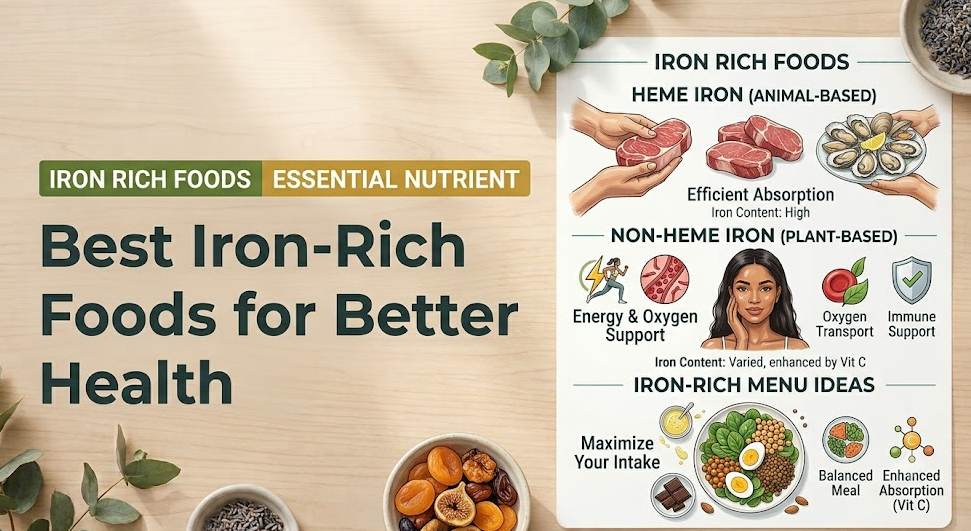
Iron is an essential mineral that plays a vital role in maintaining overall health. Your body needs iron to produce hemoglobin, a protein in red blood cells that carries oxygen throughout the body.
When your body does not get enough iron, it may affect energy levels, concentration, and overall well-being. Eating a balanced diet that includes iron-rich foods is one of the best ways to support healthy iron levels naturally.
Iron can be found in many foods, including meat, seafood, vegetables, beans, nuts, and fortified products. This article explores the best foods rich in iron and how to maximize iron absorption from your diet.
Why Is Iron Important for Your Body?
Iron is involved in many important processes, including:
- Producing healthy red blood cells
- Transporting oxygen throughout the body
- Supporting energy production
- Maintaining normal immune function
- Supporting brain development and concentration
- Helping muscles store and use oxygen
Without enough iron, your body may struggle to produce enough healthy red blood cells.
Types of Dietary Iron
There are two main types of iron found in food:
1. Heme Iron
Heme iron comes from animal-based foods.
The body generally absorbs heme iron more easily.
Sources include:
- Beef
- Chicken
- Fish
- Seafood
- Organ meats
2. Non-Heme Iron
Non-heme iron comes mainly from plant-based foods.
Sources include:
- Beans
- Lentils
- Spinach
- Nuts
- Seeds
- Whole grains
Eating vitamin C-rich foods together with plant-based iron sources can improve absorption.
1. Red Meat
Red meat is one of the richest sources of easily absorbed heme iron.
Examples:
- Beef
- Lamb
- Goat meat
Benefits:
- High in iron
- Provides protein
- Contains vitamin B12
- Supports red blood cell production
Choose lean cuts and consume red meat in moderation as part of a balanced diet.
2. Liver and Organ Meats
Organ meats are among the most concentrated sources of iron.
Examples:
- Beef liver
- Chicken liver
- Other organ meats
They also provide:
- Vitamin A
- Vitamin B12
- Folate
- Protein
Because they are very nutrient-dense, they should be eaten occasionally rather than in excessive amounts.
3. Shellfish
Seafood can be an excellent source of iron.
Iron-rich seafood includes:
- Oysters
- Mussels
- Clams
- Shrimp
Benefits:
- Provides heme iron
- Rich in protein
- Contains important minerals
- Supports overall nutrition
4. Fish
Certain fish varieties provide iron along with healthy fats and protein.
Good options include:
- Tuna
- Sardines
- Salmon
- Mackerel
Fatty fish also provides omega-3 fatty acids that support heart health.
5. Eggs
Eggs are a convenient source of nutrients, including iron.
They provide:
- Protein
- Vitamins
- Minerals
- Healthy fats
Egg yolks contain more iron than egg whites.
6. Spinach
Spinach is one of the most popular plant-based sources of iron.
It also contains:
- Vitamin C
- Fiber
- Antioxidants
- Magnesium
Ways to enjoy spinach:
- Salads
- Smoothies
- Soups
- Stir-fries
Although spinach contains non-heme iron, pairing it with vitamin C can improve absorption.
7. Lentils
Lentils are an excellent plant-based source of iron.
They are also rich in:
- Fiber
- Protein
- Magnesium
- Folate
Benefits:
- Supports digestive health
- Helps maintain energy
- Suitable for vegetarian diets
Add lentils to:
- Soups
- Salads
- Curries
- Grain bowls
8. Beans
Beans provide iron, protein, and fiber.
Iron-rich options include:
- Kidney beans
- Black beans
- Chickpeas
- White beans
Beans are affordable, versatile, and easy to include in everyday meals.
9. Tofu and Soy Products
Tofu is a popular plant-based protein that contains iron.
Other soy-based foods include:
- Tempeh
- Soybeans
- Edamame
Benefits:
- Provides plant-based protein
- Contains minerals
- Supports balanced nutrition
10. Pumpkin Seeds
Pumpkin seeds are small but nutrient-dense.
They provide:
- Iron
- Magnesium
- Zinc
- Healthy fats
Enjoy them as:
- Snacks
- Salad toppings
- Smoothie additions
11. Nuts
Many nuts contain moderate amounts of iron.
Good choices include:
- Cashews
- Almonds
- Pistachios
- Peanuts
They also provide:
- Healthy fats
- Protein
- Fiber
Choose unsalted nuts whenever possible.
12. Quinoa
Quinoa is a nutritious whole grain that contains iron.
It also provides:
- Complete plant protein
- Fiber
- Magnesium
Use quinoa instead of refined grains for a more nutrient-rich meal.
13. Dark Chocolate
Dark chocolate contains iron along with antioxidants.
Choose:
- Dark chocolate with higher cocoa content
Enjoy in moderation because chocolate can also be high in calories.
14. Fortified Cereals
Some breakfast cereals are fortified with added iron.
Check nutrition labels for:
- Iron content
- Added sugar levels
- Whole grain ingredients
Choose healthier options with more fiber and less added sugar.
15. Dried Fruits
Certain dried fruits contain iron.
Examples:
- Raisins
- Apricots
- Prunes
They are convenient snacks but should be eaten in moderate portions because they contain concentrated natural sugars.
Foods That Help Your Body Absorb Iron Better
Some nutrients improve iron absorption.
Vitamin C-Rich Foods
Vitamin C helps your body absorb non-heme iron.
Good sources include:
- Oranges
- Strawberries
- Kiwi
- Bell peppers
- Broccoli
- Tomatoes
Example:
Combine spinach with lemon juice to improve iron absorption.
Foods That May Reduce Iron Absorption
Some foods and drinks can reduce iron absorption when consumed with iron-rich meals.
Examples:
Coffee and Tea
Compounds in coffee and tea may reduce iron absorption.
Try drinking them between meals instead of with iron-rich foods.
High Calcium Foods
Calcium may interfere with iron absorption when consumed at the same time.
This does not mean you should avoid calcium-rich foods, but timing may help.
Signs of Low Iron Levels
Low iron levels may cause symptoms such as:
- Fatigue
- Weakness
- Difficulty concentrating
- Pale skin
- Dizziness
- Shortness of breath during activity
- Cold hands and feet
If you experience ongoing symptoms, consult a healthcare professional for proper evaluation.
Who Needs More Iron?
Some groups have higher iron needs, including:
- Pregnant women
- Growing children
- Teenagers
- People who menstruate
- Endurance athletes
- People following certain restrictive diets
Individual needs vary depending on age, health, and lifestyle.
Sample Iron-Rich Meal Plan
Breakfast
- Fortified oatmeal
- Strawberries
- Pumpkin seeds
Lunch
- Lentil soup
- Whole-grain bread
- Vegetable salad with lemon dressing
Snack
- Nuts and dried fruits
Dinner
- Grilled lean beef or tofu
- Quinoa
- Spinach and vegetables
Tips to Increase Iron Intake Naturally
Simple strategies:
- Include an iron-rich food at every meal
- Combine plant iron sources with vitamin C
- Choose whole foods over highly processed foods
- Add beans and lentils to meals
- Include seafood or lean meats if you eat animal products
- Avoid drinking tea or coffee directly with iron-rich meals
Frequently Asked Questions
What food is highest in iron?
Some of the richest sources include organ meats, shellfish, red meat, beans, lentils, and fortified foods.
Are vegetables good sources of iron?
Yes. Vegetables such as spinach and leafy greens contain iron, although plant-based iron is absorbed less efficiently than animal-based iron.
Can vegetarians get enough iron?
Yes. Vegetarians can get iron from beans, lentils, tofu, seeds, nuts, whole grains, and fortified foods. Combining these foods with vitamin C improves absorption.
Does iron give you more energy?
Iron supports oxygen transport in the body, so maintaining healthy iron levels helps support normal energy production.
Should I take iron supplements?
Iron supplements are not necessary for everyone and should generally be used based on healthcare guidance, especially because excessive iron intake can be harmful.
Final Thoughts
Iron is an essential mineral that supports energy, oxygen transport, and overall health. Including a variety of iron-rich foods in your daily diet can help maintain healthy iron levels naturally.
Whether you prefer animal-based foods or follow a plant-based diet, there are many nutritious options available. Combining iron-rich foods with vitamin C sources, maintaining a balanced diet, and practicing healthy eating habits can help your body get the iron it needs.
Small dietary choices every day can make a big difference in supporting long-term wellness.
Tinggalkan Balasan