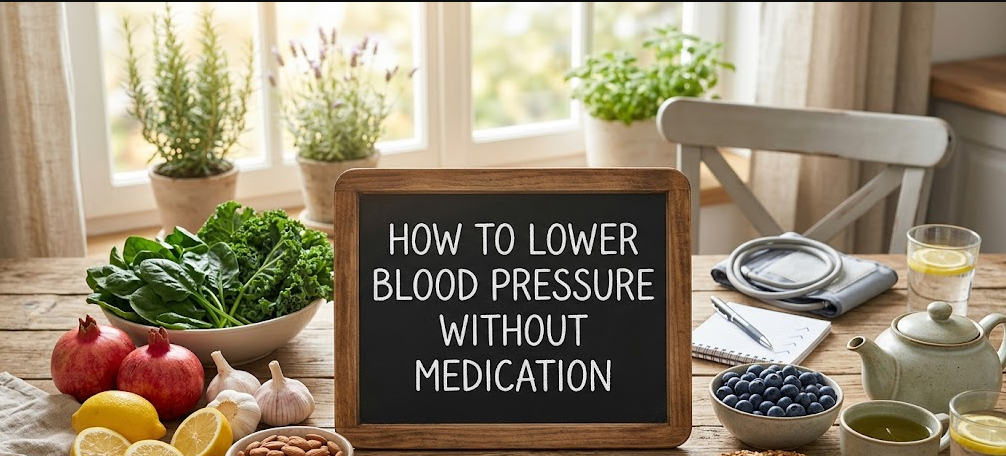
High blood pressure, also known as hypertension, is often called the “silent killer” because it usually has no obvious symptoms. Left untreated, it can increase the risk of heart disease, stroke, kidney disease, and other serious health problems.
While medication is necessary for some people, many individuals with mild or early-stage hypertension can improve their blood pressure through healthy lifestyle changes. These natural strategies not only support healthy blood pressure but also improve overall well-being.
In this guide, you’ll learn practical and evidence-based ways to lower blood pressure naturally.
Understanding Blood Pressure
Blood pressure measures the force of blood pushing against the walls of your arteries.
It is recorded using two numbers:
- Systolic Pressure: The pressure when your heart beats.
- Diastolic Pressure: The pressure when your heart rests between beats.
General Blood Pressure Categories
| Category | Blood Pressure |
|---|---|
| Normal | Below 120/80 mmHg |
| Elevated | 120–129 / Below 80 |
| High Blood Pressure (Stage 1) | 130–139 / 80–89 |
| High Blood Pressure (Stage 2) | 140/90 mmHg or higher |
Keeping your blood pressure within a healthy range reduces the risk of cardiovascular complications.
1. Reduce Your Salt Intake
Eating too much sodium causes the body to retain water, increasing the pressure on blood vessels.
Tips to Reduce Sodium
- Limit processed foods
- Read food labels carefully
- Cook meals at home
- Use herbs and spices instead of salt
- Avoid excessive fast food
Most adults should aim to consume less than 2,300 mg of sodium per day, and many people benefit from even lower amounts.
2. Eat More Potassium-Rich Foods
Potassium helps balance sodium levels and relaxes blood vessel walls.
Excellent sources include:
- Bananas
- Spinach
- Sweet potatoes
- Avocados
- Tomatoes
- Beans
- Yogurt
A diet rich in fruits and vegetables naturally increases potassium intake.
3. Follow the DASH Diet
The DASH (Dietary Approaches to Stop Hypertension) diet is one of the most recommended eating patterns for people with high blood pressure.
It focuses on:
- Fruits
- Vegetables
- Whole grains
- Lean proteins
- Low-fat dairy
- Nuts and seeds
While limiting:
- Sugary drinks
- Red meat
- Processed foods
- High-sodium snacks
Research has consistently shown that the DASH diet can significantly improve blood pressure.
4. Exercise Regularly
Physical activity strengthens the heart, allowing it to pump blood more efficiently.
Recommended activities include:
- Brisk walking
- Cycling
- Swimming
- Jogging
- Dancing
Aim for at least 150 minutes of moderate exercise each week.
Even a 30-minute walk five days a week can make a meaningful difference.
5. Maintain a Healthy Weight
Being overweight places extra strain on the heart and blood vessels.
Losing even 5–10% of your body weight can help reduce blood pressure and improve overall cardiovascular health.
Healthy weight loss should focus on sustainable eating habits rather than crash diets.
6. Eat Heart-Healthy Foods
Certain foods naturally support healthy blood pressure.
Recommended Foods
- Leafy green vegetables
- Oats
- Berries
- Fatty fish
- Nuts
- Olive oil
- Garlic
- Beans
- Lentils
These foods provide fiber, antioxidants, healthy fats, and essential nutrients that benefit heart health.
7. Reduce Added Sugar
Excess sugar contributes to weight gain, inflammation, and increased risk of hypertension.
Limit:
- Soft drinks
- Candy
- Sweet pastries
- Sweetened coffee drinks
- Sugary cereals
Instead, choose naturally sweet foods like fresh fruit.
8. Manage Stress
Long-term stress may contribute to higher blood pressure by increasing stress hormones and encouraging unhealthy habits.
Healthy ways to manage stress include:
- Meditation
- Deep breathing exercises
- Yoga
- Walking outdoors
- Listening to music
- Reading a book
Taking time to relax each day supports both mental and cardiovascular health.
9. Get Enough Sleep
Poor sleep has been linked to increased blood pressure and heart disease.
Adults should aim for 7–9 hours of quality sleep each night.
To improve sleep:
- Go to bed at the same time every night.
- Limit screen time before bed.
- Avoid caffeine late in the day.
- Keep your bedroom cool and dark.
10. Limit Alcohol Consumption
Drinking excessive amounts of alcohol can raise blood pressure over time.
If you choose to drink, do so in moderation.
Replacing alcoholic beverages with water or herbal tea can benefit both blood pressure and overall health.
11. Quit Smoking
Smoking damages blood vessels and increases the risk of heart attack and stroke.
Benefits of quitting include:
- Improved circulation
- Lower cardiovascular risk
- Better lung function
- Healthier blood vessels
It’s never too late to stop smoking and experience health improvements.
12. Stay Hydrated
Water helps your body function properly, including maintaining healthy circulation.
Drink water regularly throughout the day, especially during hot weather or physical activity.
Avoid replacing water with sugary beverages.
Foods That May Help Lower Blood Pressure
| Food | Benefit |
|---|---|
| Oats | Rich in soluble fiber |
| Spinach | High in potassium |
| Bananas | Helps balance sodium |
| Garlic | Supports healthy circulation |
| Salmon | Rich in omega-3 fatty acids |
| Blueberries | Packed with antioxidants |
| Yogurt | Good source of calcium |
| Beetroot | Contains natural nitrates |
When Should You See a Doctor?
Lifestyle changes are highly beneficial, but they are not always enough.
Seek medical advice if:
- Your blood pressure consistently stays above 140/90 mmHg
- You experience chest pain
- You have severe headaches
- You notice vision changes
- You feel shortness of breath
- You have dizziness or fainting
Never stop taking prescribed medication without consulting your healthcare provider.
Frequently Asked Questions
Can high blood pressure be reversed naturally?
In some cases, especially during the early stages, healthy lifestyle changes can significantly improve blood pressure. However, some people will still require medication.
How quickly can blood pressure improve?
Some individuals notice improvements within a few weeks after adopting healthier eating habits, exercising regularly, and reducing sodium intake.
Is coffee bad for blood pressure?
Caffeine may temporarily raise blood pressure in some people. If you have hypertension, monitor how your body responds and discuss your caffeine intake with your healthcare provider.
Final Thoughts
Lowering blood pressure naturally is one of the best investments you can make in your long-term health. Simple lifestyle changes—such as reducing salt, eating more fruits and vegetables, staying physically active, managing stress, and maintaining a healthy weight—can have a significant impact over time.
While these strategies can help many people, they should complement, not replace, professional medical advice. If you have persistent high blood pressure or other health concerns, consult a qualified healthcare provider for personalized guidance. By taking consistent, healthy steps each day, you can support your heart, improve your well-being, and reduce your risk of future complications.
Tinggalkan Balasan