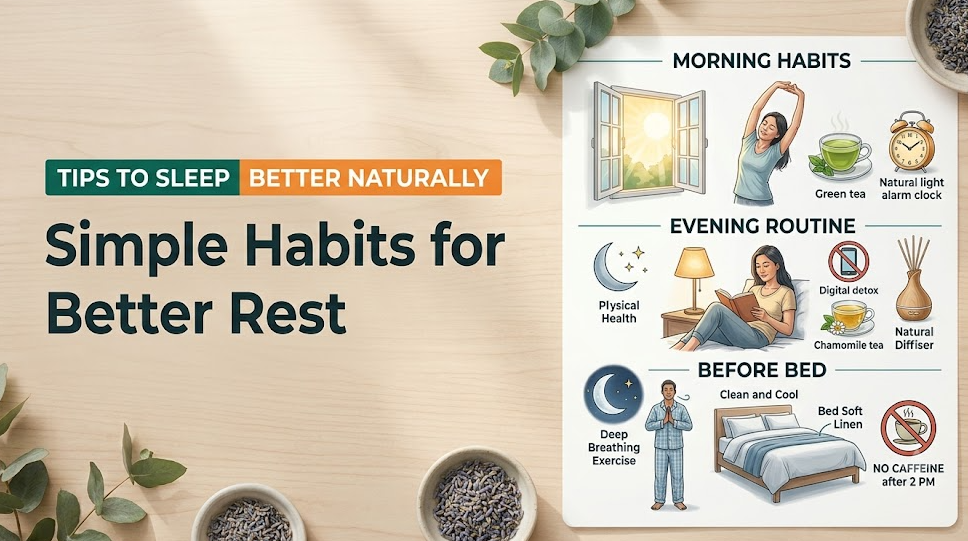
Getting enough quality sleep is one of the most important parts of a healthy lifestyle. Sleep allows your body and mind to recover, repair, and prepare for the next day.
However, many people struggle with falling asleep, staying asleep, or waking up feeling refreshed. Poor sleep can affect energy levels, mood, concentration, immune function, and overall health.
The good news is that improving your sleep does not always require complicated solutions. Simple lifestyle changes and healthy bedtime habits can naturally support better sleep quality.
In this guide, we will explore effective tips to sleep better naturally and create a healthier sleep routine.
Why Quality Sleep Is Important
Sleep is not just a time when your body rests. It is an active process that supports many important functions.
Good sleep helps your body:
- Restore energy
- Repair muscles and tissues
- Support immune function
- Regulate hormones
- Improve memory and learning
- Maintain emotional balance
- Support heart health
- Improve metabolism
Consistently poor sleep may increase the risk of health problems, including stress, weight gain, and difficulty managing blood sugar.
How Much Sleep Do You Need?
Sleep needs vary depending on age and individual factors.
General recommendations:
- Adults: 7–9 hours per night
- Teenagers: 8–10 hours
- Children: More depending on age
Quality is just as important as quantity. Sleeping for several hours but waking frequently may not provide the same benefits as deep, uninterrupted sleep.
1. Maintain a Consistent Sleep Schedule
One of the most effective ways to improve sleep naturally is keeping a regular sleep and wake time.
Try to:
- Go to bed at the same time every night
- Wake up at the same time each morning
- Keep your schedule consistent on weekends
A regular routine helps regulate your body’s internal clock, also known as the circadian rhythm.
2. Create a Relaxing Bedtime Routine
Your body needs time to transition from activity to rest.
Create calming habits before bed, such as:
- Reading a book
- Taking a warm shower
- Listening to relaxing music
- Practicing deep breathing
- Gentle stretching
- Meditation
Avoid stimulating activities that keep your brain active right before sleeping.
3. Reduce Screen Time Before Bed
Phones, tablets, computers, and televisions can interfere with sleep.
Electronic screens produce blue light, which may affect melatonin production. Melatonin is a hormone that helps regulate sleep.
Try to:
- Avoid screens 30–60 minutes before bed
- Use night mode settings
- Keep phones away from your pillow
Replacing screen time with relaxing activities may improve sleep quality.
4. Make Your Bedroom Sleep-Friendly
Your sleep environment plays an important role in how well you rest.
Create a comfortable bedroom by:
- Keeping the room cool
- Reducing noise
- Making the room dark
- Using comfortable bedding
- Maintaining a clean environment
A calm and comfortable space signals your brain that it is time to sleep.
5. Avoid Caffeine Late in the Day
Caffeine is a stimulant that can stay in your system for several hours.
Common sources include:
- Coffee
- Energy drinks
- Black tea
- Green tea
- Chocolate
If you have trouble sleeping, consider avoiding caffeine in the afternoon and evening.
6. Be Careful With Evening Meals
Eating heavy meals too close to bedtime may affect sleep.
Large late-night meals can contribute to:
- Discomfort
- Acid reflux
- Difficulty falling asleep
Try to:
- Eat dinner earlier when possible
- Choose lighter evening meals
- Avoid excessive spicy or fatty foods before bed
7. Exercise Regularly
Regular physical activity can improve sleep quality.
Exercise may help:
- Reduce stress
- Improve mood
- Support deeper sleep
- Regulate your sleep cycle
Good options include:
- Walking
- Cycling
- Swimming
- Strength training
- Yoga
Avoid intense workouts immediately before bedtime if they make you feel too energized.
8. Manage Stress Before Sleeping
Stress is one of the most common reasons people struggle with sleep.
A busy mind can make it difficult to relax.
Helpful stress-management techniques include:
- Meditation
- Journaling
- Deep breathing exercises
- Reading
- Gentle yoga
- Spending time outdoors
Reducing mental activity before bed can help prepare your body for rest.
9. Get Natural Sunlight During the Day
Exposure to natural light helps regulate your body’s internal clock.
Morning sunlight can help:
- Improve alertness during the day
- Support healthy melatonin production at night
- Maintain a regular sleep schedule
Try spending time outdoors in the morning whenever possible.
10. Avoid Long Daytime Naps
Short naps can be helpful, but long naps may interfere with nighttime sleep.
If you nap:
- Keep it around 20–30 minutes
- Avoid late afternoon naps
- Use naps as a supplement, not a replacement for nighttime sleep
11. Limit Alcohol Before Bed
Although alcohol may make some people feel sleepy initially, it can reduce sleep quality.
Alcohol may contribute to:
- More nighttime waking
- Less restorative sleep
- Poor sleep patterns
A healthier bedtime routine usually produces better long-term results.
12. Stay Hydrated, But Avoid Excessive Fluids at Night
Proper hydration supports overall health, but drinking large amounts of water right before bed may cause frequent bathroom trips.
Tips:
- Drink enough water throughout the day
- Reduce large drinks close to bedtime
13. Try Relaxing Herbal Drinks
Some caffeine-free herbal drinks may support relaxation.
Popular choices include:
- Chamomile tea
- Lavender tea
- Lemon balm tea
- Herbal blends designed for relaxation
Avoid adding large amounts of sugar before bedtime.
14. Keep Your Bed for Sleep
Your brain creates associations between places and activities.
Using your bed mainly for sleep can strengthen the connection between your bedroom and rest.
Avoid:
- Working in bed
- Watching stressful content
- Spending long periods awake in bed
15. Practice Deep Breathing Techniques
Deep breathing can activate the body’s relaxation response.
Simple technique:
- Inhale slowly through your nose.
- Hold briefly.
- Exhale slowly.
- Repeat several times.
This can help calm the nervous system before sleep.
Foods That May Support Better Sleep
Certain foods contain nutrients involved in relaxation and sleep regulation.
Examples include:
Almonds
Rich in magnesium, which supports muscle relaxation.
Bananas
Contain potassium and nutrients involved in normal body function.
Oats
Provide complex carbohydrates that may support relaxation.
Kiwi
Some research suggests kiwi may support sleep quality.
Fatty Fish
Sources of omega-3 fatty acids and vitamin D that support overall health.
Common Habits That Can Harm Sleep
Avoid these habits when possible:
- Irregular sleep schedules
- Excess caffeine consumption
- Too much screen time at night
- Stressful activities before bed
- Heavy late-night meals
- Lack of physical activity
- Sleeping in an uncomfortable environment
Small adjustments can create meaningful improvements.
Sample Healthy Evening Routine
7:00 PM
Eat a balanced dinner
8:00 PM
Relaxing activities such as reading or light stretching
9:00 PM
Reduce screen exposure
9:30 PM
Prepare bedroom environment
10:00 PM
Go to sleep
A consistent routine helps train your body to recognize when it is time to rest.
Frequently Asked Questions
How can I fall asleep faster naturally?
Creating a consistent bedtime routine, reducing screen time, managing stress, and keeping your bedroom comfortable can help you fall asleep more easily.
What is the best sleeping position?
The best sleeping position depends on personal comfort and health needs. Many people find side sleeping comfortable and supportive.
Does exercise help improve sleep?
Yes. Regular exercise can improve sleep quality by reducing stress and supporting healthy body rhythms.
How long before bed should I stop using my phone?
Many sleep experts recommend reducing screen exposure about 30–60 minutes before bedtime.
Can certain foods improve sleep?
Some foods contain nutrients that support relaxation, but overall diet quality and healthy sleep habits have the biggest impact.
Final Thoughts
Better sleep starts with simple daily habits. Maintaining a regular sleep schedule, creating a relaxing bedtime routine, reducing screen time, exercising regularly, and managing stress can naturally improve sleep quality.
Sleep is a foundation of good health, just like nutrition and physical activity. By making small, consistent changes, you can support deeper rest, better energy, and improved overall wellness.
Tinggalkan Balasan