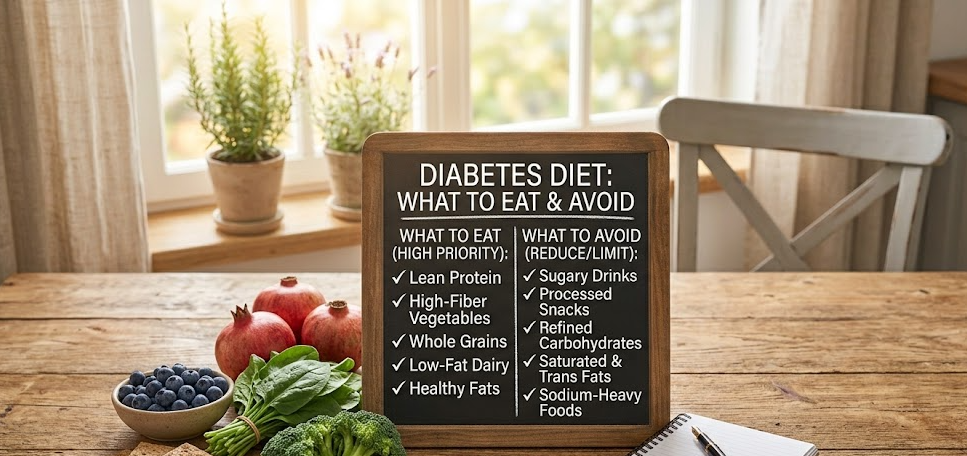
Living with diabetes doesn’t mean you have to give up enjoying food. In fact, a healthy and balanced diet is one of the most effective ways to manage blood sugar levels, improve overall health, and reduce the risk of diabetes-related complications.
Whether you have type 2 diabetes, prediabetes, or simply want to lower your risk of developing diabetes, making smart food choices can have a significant impact on your long-term well-being.
This guide explains which foods to include in your diet, which foods to limit, and practical tips for maintaining healthy blood sugar levels.
What Is Diabetes?
Diabetes is a chronic condition that affects how your body processes glucose (blood sugar). Glucose is your body’s primary source of energy, but when blood sugar remains too high for long periods, it can damage the heart, kidneys, eyes, nerves, and blood vessels.
The three most common types include:
- Type 1 Diabetes
- Type 2 Diabetes
- Gestational Diabetes
Although treatment plans vary, healthy eating plays an important role in managing every type of diabetes.
also : Signs and Symptoms of Vitamin D Deficiency
Why Your Diet Matters
Food directly affects blood sugar levels.
Choosing nutrient-rich foods can help:
- Maintain stable blood sugar
- Improve insulin sensitivity
- Support a healthy weight
- Reduce cholesterol
- Lower blood pressure
- Protect heart health
- Increase daily energy
A healthy diabetes diet focuses on balance rather than strict restrictions.
Best Foods for People with Diabetes
1. Non-Starchy Vegetables
Vegetables are rich in vitamins, minerals, antioxidants, and fiber while being naturally low in calories.
Excellent choices include:
- Spinach
- Broccoli
- Cauliflower
- Cabbage
- Kale
- Bell peppers
- Cucumbers
- Green beans
- Zucchini
- Lettuce
Aim to fill half your plate with vegetables at most meals.
Whole Grains
Whole grains digest more slowly than refined carbohydrates, helping reduce rapid blood sugar spikes.
Healthy options include:
- Brown rice
- Oats
- Quinoa
- Whole wheat bread
- Barley
- Whole grain pasta
Watch portion sizes, as carbohydrates still affect blood sugar.
Lean Protein
Protein helps you stay full and supports muscle health.
Choose:
- Skinless chicken
- Turkey
- Fish
- Eggs
- Tofu
- Beans
- Lentils
- Low-fat dairy
Protein has little effect on blood sugar compared to refined carbohydrates.
Healthy Fats
Healthy fats support heart health and may improve cholesterol levels.
Good sources include:
- Avocados
- Olive oil
- Almonds
- Walnuts
- Chia seeds
- Flaxseeds
- Pumpkin seeds
Eat them in moderation because they are calorie-dense.
Fruits
Fruit contains natural sugars but also provides fiber, vitamins, and antioxidants.
Better choices include:
- Apples
- Berries
- Pears
- Oranges
- Kiwi
- Grapefruit
Choose whole fruit instead of fruit juice whenever possible.
Fatty Fish
Fish rich in omega-3 fatty acids support cardiovascular health.
Examples:
- Salmon
- Sardines
- Mackerel
- Tuna
Try eating fish at least twice each week.
Legumes
Beans and lentils are excellent sources of fiber and plant-based protein.
Popular choices:
- Black beans
- Kidney beans
- Chickpeas
- Lentils
They help keep blood sugar stable while promoting fullness.
Foods to Limit or Avoid
Sugary Drinks
Sugary beverages can cause rapid increases in blood sugar.
Avoid:
- Soda
- Sweet tea
- Energy drinks
- Sweetened coffee
- Fruit punch
Instead, drink:
- Water
- Sparkling water
- Herbal tea
- Unsweetened coffee
Refined Carbohydrates
Highly processed carbohydrates digest quickly and may raise blood sugar rapidly.
Limit:
- White bread
- White rice
- Pastries
- Cakes
- Cookies
- Sugary breakfast cereals
Choose whole-grain alternatives whenever possible.
Candy and Sweets
Desserts are often high in sugar and unhealthy fats.
Limit:
- Chocolate bars
- Candy
- Ice cream
- Doughnuts
- Sweet pastries
These foods should be occasional treats rather than daily habits.
Processed Foods
Many processed foods contain excessive sodium, unhealthy fats, and added sugars.
Examples include:
- Chips
- Instant noodles
- Processed meats
- Frozen meals
- Fast food
Preparing meals at home gives you greater control over ingredients.
Fried Foods
Deep-fried foods are often high in unhealthy fats and calories.
Examples:
- French fries
- Fried chicken
- Fried snacks
Healthier cooking methods include:
- Baking
- Grilling
- Steaming
- Roasting
Healthy Snacks for Diabetes
Good snack ideas include:
- Greek yogurt
- A handful of almonds
- Apple slices with peanut butter
- Carrot sticks
- Boiled eggs
- Cottage cheese
- Mixed berries
- Hummus with vegetables
Healthy snacks can help prevent excessive hunger between meals.
Portion Control
Even healthy foods should be eaten in appropriate amounts.
A simple method is the Diabetes Plate Method.
Fill your plate with:
- 50% Non-starchy vegetables
- 25% Lean protein
- 25% Whole grains or healthy carbohydrates
This approach helps balance nutrients and supports healthy blood sugar.
Sample One-Day Diabetes Meal Plan
Breakfast
- Oatmeal topped with blueberries
- Boiled egg
- Unsweetened green tea
Morning Snack
- Small apple
- Handful of walnuts
Lunch
- Grilled chicken breast
- Brown rice
- Steamed broccoli
- Mixed salad
Afternoon Snack
- Greek yogurt
Dinner
- Baked salmon
- Roasted vegetables
- Quinoa
Evening Snack
- Cottage cheese with cucumber slices
Lifestyle Habits That Support Blood Sugar Control
Healthy eating works best when combined with other positive lifestyle habits.
Exercise Regularly
Aim for at least 150 minutes of moderate exercise each week.
Activities include:
- Walking
- Cycling
- Swimming
- Strength training
Exercise helps your body use insulin more effectively.
Stay Hydrated
Water is the best beverage for people with diabetes.
Proper hydration supports normal body functions and overall health.
Get Enough Sleep
Adults should aim for 7–9 hours of quality sleep each night.
Poor sleep may negatively affect blood sugar regulation.
Manage Stress
Chronic stress may contribute to elevated blood sugar levels.
Helpful stress-management techniques include:
- Meditation
- Yoga
- Walking
- Deep breathing
- Reading
- Spending time in nature
Frequently Asked Questions
Can people with diabetes eat fruit?
Yes. Whole fruits contain fiber and nutrients. Choose whole fruit instead of fruit juice and pay attention to portion sizes.
Is rice bad for diabetes?
Not necessarily. Whole grains such as brown rice generally contain more fiber than white rice and may have a gentler effect on blood sugar. Portion size also matters.
Can people with diabetes eat sweets?
Occasional treats can fit into an overall balanced eating plan, but foods high in added sugars should be limited.
Is breakfast important?
Yes. A balanced breakfast can help support steady energy levels and make it easier to manage hunger throughout the day.
Final Thoughts
A healthy diabetes diet is not about eliminating entire food groups or following overly restrictive rules. Instead, it focuses on choosing nutrient-rich foods, eating balanced meals, controlling portions, and limiting foods high in added sugars, refined carbohydrates, and unhealthy fats.
Every person’s nutritional needs are different. If you have diabetes or prediabetes, consider working with your healthcare provider or a registered dietitian to create a meal plan that fits your health goals, lifestyle, and medical needs. Consistent healthy eating, regular physical activity, and routine medical care are key to managing diabetes and supporting long-term well-being.
Tinggalkan Balasan