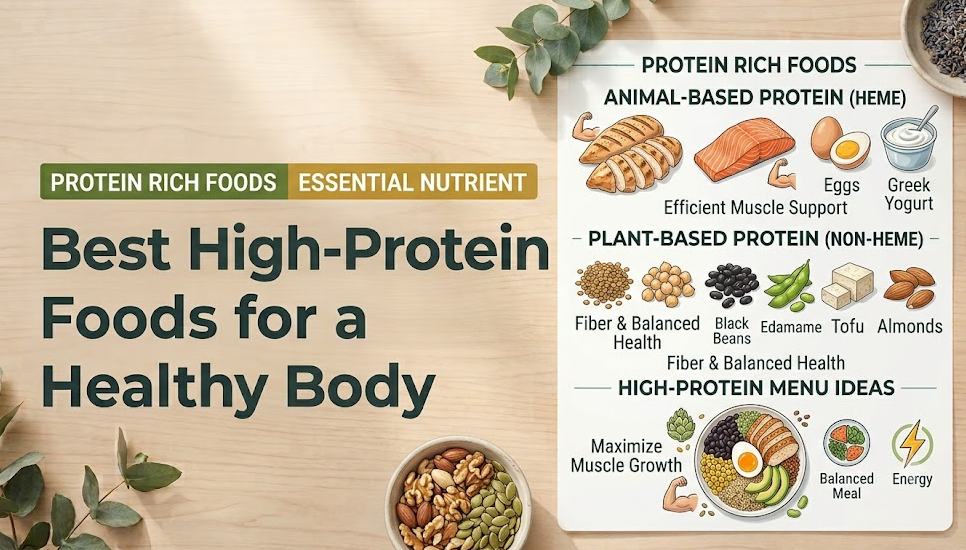
Protein is one of the most important nutrients your body needs to maintain health, strength, and energy. Every cell in your body contains protein, and it plays a major role in building muscles, repairing tissues, producing hormones, and supporting immune function.
Including enough protein in your daily diet can help you feel full longer, maintain muscle mass, support weight management, and improve overall wellness.
Protein can be found in many foods, including meat, fish, eggs, dairy products, beans, nuts, seeds, and plant-based alternatives.
Also : Foods Rich in Iron: Best Iron-Rich Foods for Better Health
In this article, we will explore the best foods rich in protein and how they can support a healthy lifestyle.
Why Is Protein Important for Your Body?
Protein is often called the body’s building block because it supports many essential functions.
Your body uses protein for:
- Building and repairing muscles
- Maintaining healthy skin, hair, and nails
- Supporting immune function
- Producing enzymes and hormones
- Maintaining body tissues
- Supporting healthy metabolism
Without enough protein, your body may struggle to repair tissues and maintain muscle strength.
How Much Protein Do You Need Daily?
Protein needs vary depending on:
- Age
- Body weight
- Activity level
- Fitness goals
- Overall health
People who exercise regularly, build muscle, or are physically active may need more protein compared with those with a less active lifestyle.
A balanced diet usually provides enough protein when it includes a variety of nutrient-rich foods.
1. Eggs
Eggs are one of the most popular and affordable sources of high-quality protein.
They contain all essential amino acids needed by the body.
Benefits of eggs:
- High-quality protein
- Supports muscle repair
- Provides vitamins and minerals
- Helps keep you full
Eggs are also rich in:
- Vitamin B12
- Selenium
- Choline
Healthy preparation methods include:
- Boiled eggs
- Scrambled eggs with vegetables
- Omelets
2. Chicken Breast
Chicken breast is a lean protein source commonly used in healthy diets.
Benefits:
- High in protein
- Low in fat
- Supports muscle maintenance
- Easy to prepare
Healthy cooking methods:
- Grilling
- Baking
- Steaming
- Stir-frying with vegetables
Avoid excessive frying or processed chicken products.
3. Fish
Fish provides high-quality protein along with important nutrients.
Protein-rich fish include:
- Salmon
- Tuna
- Cod
- Sardines
- Mackerel
Many fish varieties also contain omega-3 fatty acids, which support:
- Heart health
- Brain function
- Healthy inflammation response
4. Greek Yogurt
Greek yogurt is a protein-rich dairy food that is popular for breakfast and snacks.
Benefits:
- High in protein
- Supports muscle health
- Contains calcium
- May support digestive health through probiotics
Healthy combinations:
- Greek yogurt with berries
- Yogurt with nuts and seeds
- Yogurt with oats
Choose plain varieties with less added sugar.
5. Lean Beef
Lean beef provides protein and important nutrients.
It contains:
- Protein
- Iron
- Zinc
- Vitamin B12
These nutrients support:
- Energy production
- Muscle function
- Healthy blood cells
Choose lean cuts and enjoy red meat as part of a balanced diet.
6. Lentils
Lentils are one of the best plant-based protein sources.
They are also rich in:
- Fiber
- Iron
- Folate
- Minerals
Benefits:
- Supports digestion
- Helps maintain fullness
- Suitable for vegetarian diets
Ways to eat lentils:
- Lentil soup
- Salads
- Curries
- Protein bowls
7. Beans
Beans are affordable, nutritious, and versatile.
Protein-rich beans include:
- Black beans
- Kidney beans
- Chickpeas
- White beans
Benefits:
- Plant-based protein
- High in fiber
- Supports heart health
- Helps control appetite
8. Tofu and Tempeh
Soy-based foods are excellent protein sources, especially for people following plant-based diets.
Examples:
- Tofu
- Tempeh
- Edamame
Benefits:
- Complete plant protein
- Contains minerals
- Supports muscle health
They can be added to:
- Stir-fries
- Soups
- Salads
- Rice dishes
9. Nuts
Nuts provide protein along with healthy fats.
Good choices include:
- Almonds
- Peanuts
- Walnuts
- Pistachios
- Cashews
Benefits:
- Supports heart health
- Provides long-lasting energy
- Helps control hunger
Choose unsalted nuts when possible.
10. Seeds
Seeds are small foods packed with nutrients.
High-protein seeds include:
- Pumpkin seeds
- Chia seeds
- Hemp seeds
- Flaxseeds
They also provide:
- Fiber
- Healthy fats
- Minerals
Add them to:
- Smoothies
- Yogurt
- Oatmeal
- Salads
11. Cottage Cheese
Cottage cheese is a dairy product that contains a high amount of protein.
Benefits:
- Supports muscle recovery
- Provides calcium
- Helps keep you satisfied
It can be eaten with:
- Fruits
- Nuts
- Whole-grain foods
12. Quinoa
Quinoa is a nutritious grain-like food that contains protein.
Unlike many plant foods, quinoa provides all essential amino acids.
Benefits:
- Plant-based protein
- High in fiber
- Contains minerals
Use quinoa as an alternative to:
- White rice
- Pasta
- Refined grains
13. Turkey
Turkey is a lean protein source that can support healthy eating goals.
Benefits:
- High protein content
- Lower fat options available
- Supports muscle maintenance
Choose fresh turkey instead of highly processed versions.
14. Seafood
Seafood provides protein and important nutrients.
Examples:
- Shrimp
- Crab
- Oysters
- Mussels
Benefits:
- High-quality protein
- Rich in minerals
- Supports healthy nutrition
15. Milk
Milk provides protein along with calcium and other nutrients.
Options include:
- Regular milk
- Low-fat milk
- Plant-based protein-fortified milk
Milk can be added to:
- Smoothies
- Oatmeal
- Coffee
Benefits of Eating Enough Protein
1. Supports Muscle Growth and Repair
Protein provides amino acids needed for:
- Building muscle
- Recovering after exercise
- Maintaining strength
This is especially important for active individuals.
2. Helps With Weight Management
Protein can help control appetite because it increases feelings of fullness.
A high-protein meal may help:
- Reduce unnecessary snacking
- Support calorie control
- Maintain muscle during weight loss
3. Supports Healthy Aging
Maintaining muscle becomes increasingly important as people age.
Adequate protein intake helps support:
- Strength
- Mobility
- Independence
4. Supports Immune Function
Protein contributes to the production of antibodies and immune-related compounds.
A balanced diet with enough protein supports normal immune health.
Best High-Protein Breakfast Ideas
Option 1:
- Greek yogurt
- Berries
- Chia seeds
- Nuts
Option 2:
- Eggs
- Whole-grain toast
- Vegetables
Option 3:
- Protein smoothie
- Banana
- Peanut butter
Best High-Protein Meals
Lunch:
- Grilled chicken
- Brown rice
- Vegetables
Dinner:
- Salmon
- Quinoa
- Salad
Vegetarian Option:
- Tofu stir-fry
- Lentils
- Vegetables
Protein Foods for Weight Loss
High-protein foods that may support weight management include:
- Eggs
- Chicken breast
- Fish
- Greek yogurt
- Lentils
- Beans
- Tofu
Combine protein with:
- Vegetables
- Whole grains
- Healthy fats
for balanced meals.
Protein Foods for Muscle Building
People focused on muscle growth often include:
- Eggs
- Chicken
- Beef
- Fish
- Greek yogurt
- Protein-rich legumes
Protein works best when combined with:
- Resistance training
- Adequate calories
- Proper recovery
Common Mistakes About Protein
Eating Too Much Protein Without Balance
Protein is important, but your body also needs:
- Healthy fats
- Carbohydrates
- Vitamins
- Minerals
Choosing Processed Protein Foods
Some processed foods may contain:
- Excess sodium
- Added sugar
- Unhealthy ingredients
Choose whole-food protein sources whenever possible.
Ignoring Plant Protein Sources
Plant foods can provide excellent protein when combined with a varied diet.
Frequently Asked Questions
What foods are highest in protein?
Some of the highest protein foods include eggs, chicken breast, fish, lean beef, Greek yogurt, beans, lentils, tofu, and nuts.
Is protein good for weight loss?
Yes. Protein can help increase fullness and support muscle maintenance during weight loss.
Can vegetarians get enough protein?
Yes. Foods like lentils, beans, tofu, tempeh, quinoa, nuts, and seeds provide excellent plant-based protein.
Should I eat protein after exercise?
Eating protein after exercise can support muscle recovery, especially when combined with a balanced diet.
Are protein supplements necessary?
Most people can get enough protein from whole foods. Supplements may be useful for some individuals depending on their goals and dietary needs.
Final Thoughts
Protein is an essential nutrient that supports muscle health, energy, immunity, and overall wellness. Adding a variety of protein-rich foods to your daily meals can help you build a stronger and healthier body.
Whether you prefer animal-based foods or plant-based options, there are many nutritious ways to meet your protein needs.
Focus on whole foods, balanced meals, and consistent healthy habits to support long-term health.
Tinggalkan Balasan